
In the heart of Kerala lies a place where land and water blend so seamlessly that it feels like a world of its own—Alappuzha. Here, roads give way to backwaters, boats replace cars, and life flows at a calm, unhurried pace. It’s not just a destination; it’s an experience that gently pulls you away from the chaos of everyday life.
Mornings begin with mist hovering over still waters, while evenings end with golden sunsets melting into the horizon. As you glide through the backwaters on a houseboat, time seems to slow down, letting you truly breathe and take it all in. Surrounded by lush greenery and quiet villages, Alappuzha offers a rare sense of peace.
For those seeking to disconnect from noise and reconnect with nature, Alappuzha is not just a journey—it’s a feeling you’ll carry long after you leave.
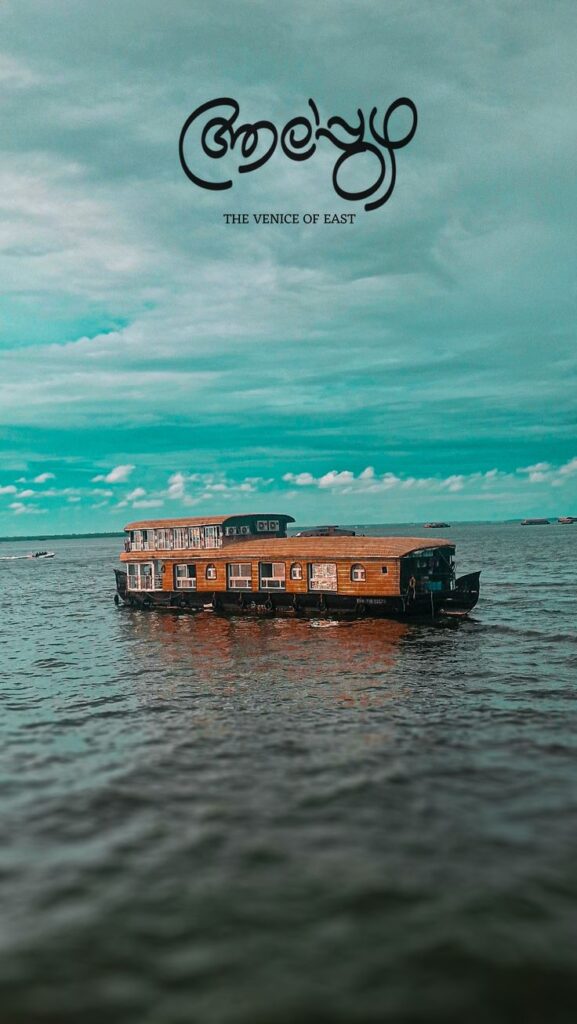
The Beauty of Alappuzha: Backwaters & Village Life
Alappuzha, often called the “Venice of the East,” is famous for its intricate network of backwaters, canals, and lagoons. This unique landscape creates a serene environment where water becomes the center of daily life.
One of the most iconic experiences here is the houseboat journey. Traditionally known as kettuvallams, these boats have been transformed into floating homes with modern comforts. As you drift slowly across the waters, you witness everyday village life—fishermen casting nets, farmers tending paddy fields, and children traveling by canoe. It’s a beautiful reminder of how closely life here is connected to nature.
The vast Vembanad Lake, the largest lake in Kerala, forms the heart of Alappuzha’s backwaters. Watching the sunset over this endless stretch of water is a moment of pure tranquility, where the sky and lake seem to merge into one.
Alappuzha Beach: Where Sea Meets Serenity
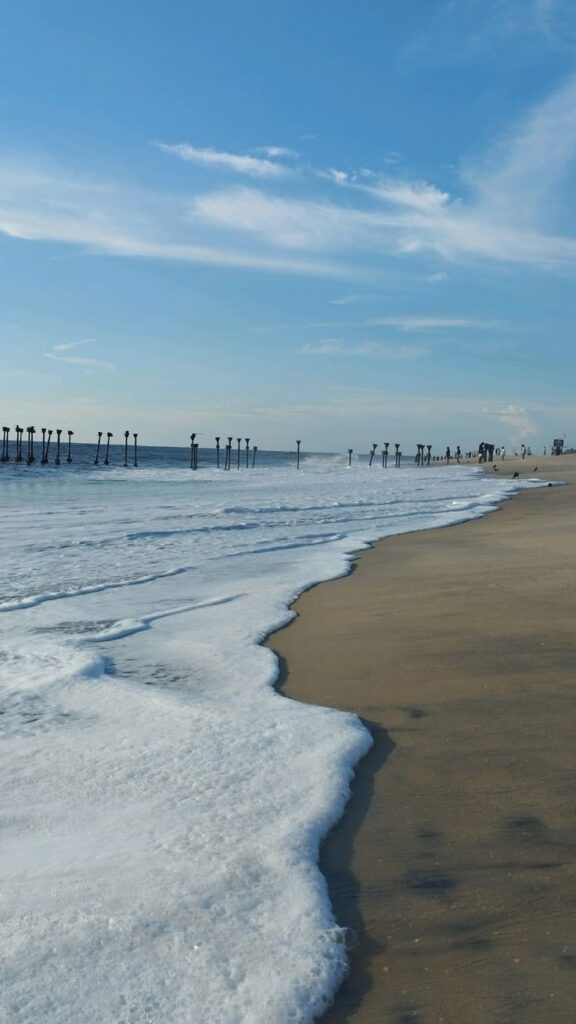
Another highlight of Alappuzha is its beautiful coastline. The Alappuzha Beach is known for its historic pier that stretches into the Arabian Sea, offering stunning views and a touch of nostalgia.
Evenings at the beach are especially magical. The sound of waves, the cool sea breeze, and the sight of the sun dipping below the horizon create a peaceful atmosphere. It’s the perfect place to slow down, reflect, and simply enjoy the moment.
Nehru Trophy Boat Race: The Spirit of Celebration
Alappuzha is also home to the famous Nehru Trophy Boat Race, a spectacular event held every year on the backwaters. Long, snake-like boats race across the water, powered by teams of rowers moving in perfect rhythm.
The energy during the race is electrifying. Crowds gather along the banks, cheering as the boats glide forward with incredible speed and coordination. More than just a competition, it is a celebration of tradition, teamwork, and local culture.
Village Life: Simplicity at Its Best
Beyond its attractions, the true charm of Alappuzha lies in its villages. Life here is simple, yet deeply fulfilling. Coconut trees sway gently along the waterways, small homes sit by the canals, and daily routines unfold in harmony with nature.
Spending time in these villages allows you to experience a slower, more mindful way of living. It’s a place where happiness is found in simplicity, and where every moment feels genuine and unhurried.
Alappuzha is more than just a travel destination—it’s an emotion. It invites you to pause, breathe, and reconnect with the beauty of nature and the simplicity of life.
Whether it’s drifting through the backwaters, watching the sunset over Vembanad Lake, or feeling the waves at Alappuzha Beach, every experience here leaves a lasting impression. if you’re looking for peace, beauty, and a deeper connection with nature, Alappuzha is waiting for you. And once you’ve been here, a part of you will always remain behind—floating gently on its timeless waters.https://payyormala.in/blog7/
The Deeper Charm of Alappuzha: Where Time Slows Down
The more time you spend in Alappuzha, the more it begins to change you. It’s not a place that overwhelms you with attractions—it quietly draws you in, one slow moment at a time.
Mornings That Feel Different
In Alappuzha, mornings don’t begin with noise—they unfold gently. Mist rises over the waters of Vembanad Lake, birds glide low across the surface, and the first boats move silently through narrow canals.
It’s the kind of morning that feels untouched, where you don’t feel the urge to rush. You simply sit, watch, and exist in the moment.
The Human Connection
One of the most underrated aspects of Alappuzha is its people. There’s a warmth here that doesn’t feel forced or transactional. Whether it’s a boatman sharing stories, a local offering directions, or a small shop owner striking up a conversation—interactions feel genuine.
These small human moments often become the most memorable part of the journey.
Rain and Monsoon Magic
If you visit during the monsoon, Alappuzha transforms. Rain adds a new layer of beauty—the canals overflow with life, the greenery becomes more vibrant, and the air feels fresh and cool.
While it may not be the “ideal” tourist season, it offers a more intimate and less crowded experience.
The Balance Between Stillness and Activity
Alappuzha isn’t entirely quiet. There are moments of movement—boats passing by, markets buzzing, festivals bringing energy to the town. But these moments never overpower the overall calm.
It’s this balance that makes the place feel alive, yet peaceful.
Responsible Travel Matters Here
The beauty of Alappuzha is delicate. The backwaters, the ecosystems, and the local way of life depend on balance.
The Feeling You Take Back
Alappuzha doesn’t try to impress you—it simply exists in its own rhythm. And somewhere along the way, you begin to match that rhythm.
You slow down.
You notice more.
You feel lighter.
Final Reflection
In the end, Alappuzha is not just about backwaters or houseboats. It’s about a way of life—one that values simplicity, connection, and calm.
When the Backwaters Fall Silent
After sunset, the busy waterways begin to calm. Houseboats anchor, engines switch off, and the ripples slowly fade. The vast stretch of Vembanad Lake turns dark and still, reflecting faint lights from distant homes.
There’s a kind of silence here that feels rare—undisturbed and deep.
The Sound of Night
Night in Alappuzha isn’t completely quiet—it has its own soundtrack. Crickets chirping, water gently touching the banks, and the occasional passing boat create a natural rhythm.
It’s subtle, but if you pay attention, it becomes part of the experience.
Staying on the Water
Spending a night on a houseboat changes your perspective. With no city noise or distractions, you become more aware of your surroundings. Time slows even further, and simple things—like the movement of water or the cool night air—feel more vivid.
It’s not luxury in the usual sense—it’s peaceful immersion.
Early Morning Fishermen
Before sunrise, life quietly begins again. Fishermen head out into the waters, their silhouettes barely visible against the early light. Watching this routine gives you a glimpse into a way of life that has remained unchanged for generations.
It’s raw, real, and grounding.
The Beauty in Simplicity
Alappuzha doesn’t rely on grand attractions at night. There are no flashing lights or loud entertainment. Instead, it offers something far more rare—simplicity.
A quiet walk along a canal.
A cup of tea by the water.
A moment of stillness with nothing to distract you.
Why This Side Matters
Most travel experiences are built around activity—things to see, places to go, lists to complete. But Alappuzha, especially after hours, reminds you that sometimes the most meaningful experiences come from doing very little.
A Place That Slows You Down
By the time you leave Alappuzha, you may notice something has shifted. You’re less hurried, more observant, and a little more connected to your surroundings.
Because Alappuzha doesn’t just show you a place—it quietly changes the pace at which you experience the world.
Tourism: A Blessing and a Burden
Tourism has brought livelihoods, visibility, and growth to Alappuzha. Houseboats glide across the waters of Vembanad Lake, offering visitors a unique experience that has become globally recognized.
But with popularity comes pressure. Increasing numbers of boats, waste disposal issues, and fuel pollution are slowly affecting the delicate ecosystem of the backwaters.
The Struggle of the Ecosystem
The backwaters are not just scenic—they are living systems. Fish, birds, plants, and local communities all depend on their health.
Pollution, plastic waste, and overuse are beginning to show their impact. In some areas, water quality has declined, and the natural balance is under strain.
The Houseboat Debate
Houseboats are the heart of Alappuzha’s tourism, but they are also part of the challenge. Not all operate sustainably. Waste management, sewage disposal, and fuel emissions have raised concerns among environmentalists and locals.
Efforts are being made to introduce eco-friendly practices, but change is gradual.
Urbanization Creeping In
As demand grows, construction increases. New buildings, resorts, and roads are slowly altering the landscape. While development brings comfort and accessibility, it also risks taking away the raw, untouched charm that defines Alappuzha.
Local Lives in Transition
For many locals, tourism has shifted traditional ways of living. Fishing and farming are no longer the only sources of income. Many now depend on tourism-related work—guiding, boating, hospitality.
This shift brings opportunity, but also uncertainty, especially during off-seasons or unexpected disruptions.
Water as a Way of Life
In Alappuzha, water is not scenery—it’s infrastructure. It’s how people travel, work, and live. The canals connected to Vembanad Lake act like roads, carrying everything from schoolchildren to daily supplies.
This deep integration of water into everyday life is what makes the region so unique—and so sensitive to change.
The Invisible Fragility
At first glance, everything seems calm and stable. But beneath the surface, the ecosystem is delicate. Small imbalances—pollution, overuse, or climate shifts—can have long-term effects.
Water levels fluctuate. Fish populations change. Vegetation patterns shift. These are not always visible to visitors, but they are very real to the people who live here.
Climate and Uncertainty
Like much of coastal Kerala, Alappuzha faces the growing impact of climate change. Rising water levels, unpredictable rainfall, and flooding have become part of the conversation.
Regions like Kuttanad, already below sea level, are especially vulnerable. What looks like a peaceful landscape is also a place constantly adapting to environmental challenges.
The Contrast Visitors Don’t Always See
For travelers, Alappuzha can feel like an escape—a break from fast-paced life. But for locals, it’s a place of responsibility, work, and adaptation.
The same waters that look calming to a visitor can be unpredictable for a fisherman. The same rains that feel refreshing can threaten crops and homes.
This contrast adds depth to the experience—if you take the time to notice it.
Slowness as a Lesson
Alappuzha teaches something that many places don’t: the value of slowing down. Not just physically, but mentally.
Not Just Beauty, But Reality
It’s easy to describe Alappuzha as beautiful—and it is. But it’s also complex, evolving, and sometimes vulnerable.
Understanding this doesn’t take away from its charm.
It makes the experience more real, more grounded, and more meaningful.
A Final Thought
Alappuzha doesn’t ask to be admired from a distance. It asks to be understood.
Because once you see it not just as a destination, but as a living landscape, your perspective changes—not just about this place, but about how we travel, and how we connect with the world around us.
When Beauty Becomes Demand
The backwaters of Vembanad Lake were not created for tourism—they were shaped by nature and sustained by local life. But today, their beauty has turned into demand.
More visitors mean more boats, more construction, and more pressure on a system that was never designed for such scale.
The Illusion of Endless Calm
To a traveler, Alappuzha can feel endlessly calm—water stretching in every direction, slow-moving boats, and quiet villages. But this calm is not permanent. It requires balance.
Behind the scenes, there are constant efforts to maintain waterways, manage waste, and adapt to environmental changes. The calm you see is, in many ways, carefully held together.
The Cost of Convenience
Modern tourism often prioritizes comfort—air-conditioned houseboats, packaged experiences, quick itineraries. While convenient, these additions can distance visitors from the true nature of the place.
The more comfortable the experience becomes, the less authentic it sometimes feels.
A Landscape That Remembers
Places like Alappuzha hold memory—not in monuments, but in patterns. The way water flows, the way people move, the way seasons change.
When these patterns are disrupted, even slightly, the effects ripple outward. It may not be immediately visible, but over time, the landscape changes.
The Responsibility We Carry
Visiting a place like Alappuzha is not a neutral act. Every choice—where you stay, how you travel, what you leave behind—becomes part of its story.
It’s easy to enjoy the beauty. It’s harder, but more important, to respect it.
The Truth Beneath the Surface
Alappuzha is not just calm waters and scenic views. It is effort, adaptation, and resilience. It is a place constantly balancing what it is with what it is becoming.
Ending Thought
The real question is not whether Alappuzha is beautiful—it clearly is.
The question is whether we can appreciate that beauty without slowly taking it away.
Because the future of Alappuzha isn’t just in its waters—
it’s in the way we choose to see, experience, and respect them.
The Passage of Time Feels Different
Time behaves differently here. Hours pass without you realizing it. There’s no rush, no strict plan—just a gentle flow, much like the backwaters themselves.
It’s a rare experience in a world where everything feels scheduled and fast.
A Slight Melancholy
There’s also a faint sense of melancholy in Alappuzha. Maybe it’s the slow pace, the fading light over the water, or the quietness of the surroundings.
It’s not sadness—but a reflective mood that makes you pause and think.
Why It Stays With You
Alappuzha doesn’t overwhelm your senses—it settles into them. Long after you leave, you might find yourself missing not a specific place, but a feeling.
The calm.
The silence.
The simplicity.
A Mood More Than a Destination
Alappuzha isn’t about dramatic landmarks or fast-paced exploration. It’s about a feeling—a calm, almost meditative state that settles in as you spend time by the waters of Vembanad Lake.
You don’t chase experiences here. They come to you slowly.
The Weight of Stillness
In a world filled with constant noise and motion, the stillness of Alappuzha can feel unfamiliar at first. There’s no urgency, no pressure to keep moving.
At times, that stillness can even feel heavy—like the place is asking you to sit with your thoughts, without distraction.
Solitude and Reflection
Alappuzha has a way of making you introspective. Sitting alone by a canal, watching the water pass, you might find yourself thinking more deeply than usual.
It’s not loneliness—it’s a quiet kind of solitude that allows space for reflection.
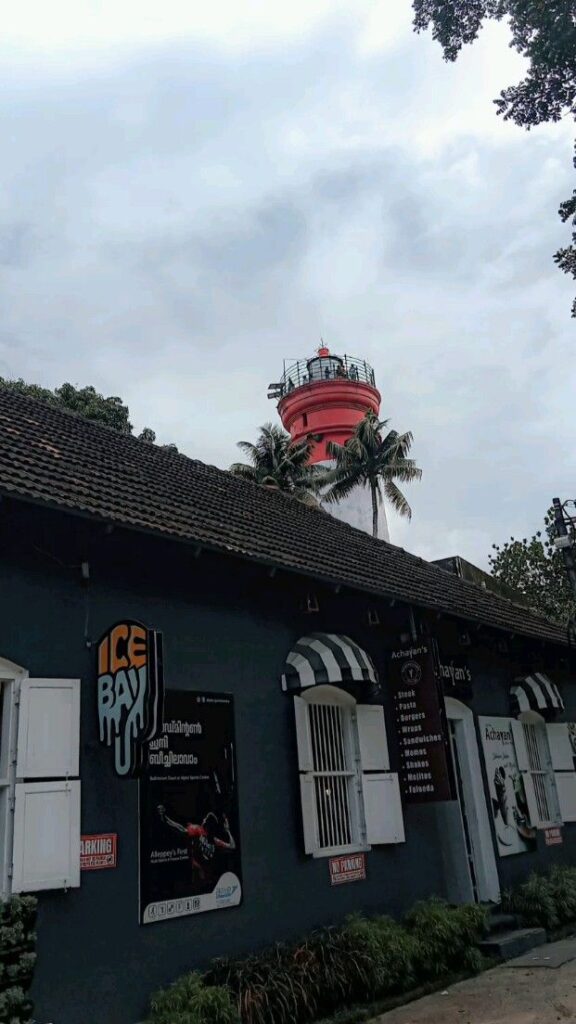
Alappuzha Lighthouse: A Timeless Coastal Landmark
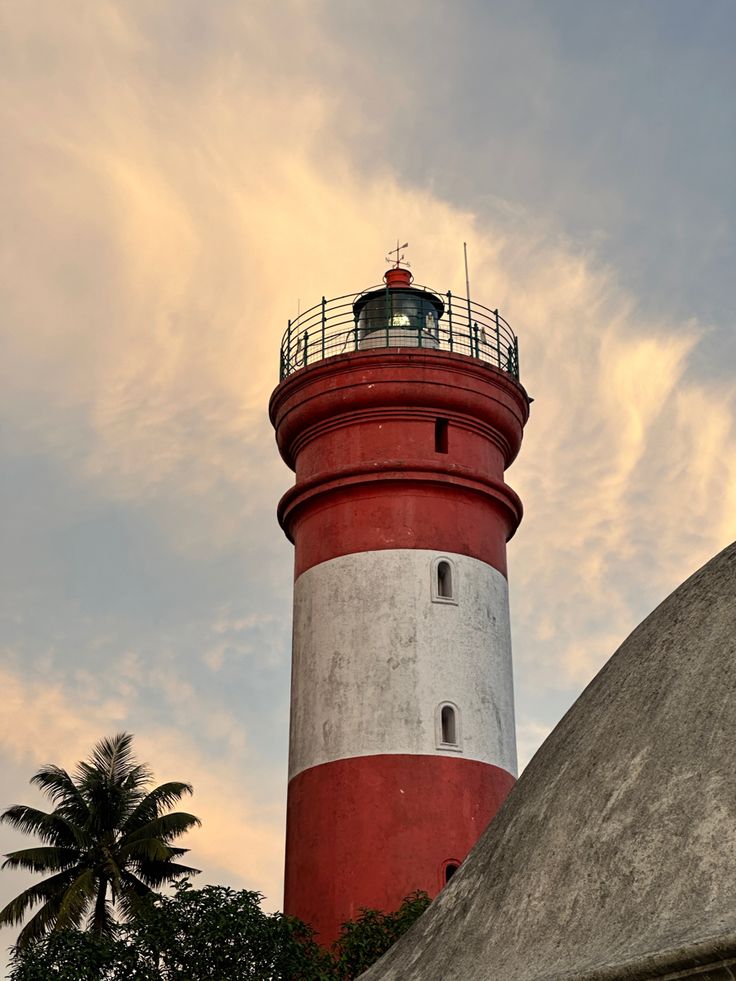
Standing tall near the shoreline, the Alappuzha Lighthouse is one of the most recognizable landmarks in Alappuzha. With its striking red-and-white spiral design, it offers not just history, but one of the best views in the region.
A Glimpse Into History
Built in the 19th century, the lighthouse reflects Alappuzha’s past as an important port town. During colonial times, it guided ships safely along the coast, playing a key role in maritime trade.
Even today, it stands as a reminder of the town’s connection to the sea.
The View From the Top
Climbing to the top of the lighthouse is a must-do experience. The narrow spiral staircase leads you to a panoramic view that stretches across:
- The vast Arabian Sea
- The golden sands of Alappuzha Beach
- The surrounding town and swaying coconut trees